
|
|
|||||||
 |
|
|
Thread Tools | Search this Thread | Display Modes |
 31st October 2010, 08:13 PM
|
#31 |
|
Member

Join Date: Nov 2008
Location: Russia, Leningrad
Posts: 355
|

Hallow, Michael! Thank you for sharing this. I have not seen this picture before. In which manuscript it is?
|

|

|
|
31st October 2010, 09:29 PM
|
#32 |
|
Member
Join Date: Nov 2008
Location: Russia, Leningrad
Posts: 355
|
it seems that we can see the matchcords which is hanging on the fingers:
|
|
|
|
|
31st October 2010, 10:56 PM
|
#33 |
|
(deceased)

Join Date: Sep 2008
Location: Bavaria, Germany - the center of 15th and 16th century gunmaking
Posts: 4,310
|
Hello, Alexender,
In Koch's book which I cited in full it sadly just says 'British Library', without mentioning the manuscript. So: sorry.  Honestly, I do not believe that the items you encircled are actual lengths of matchcord. If you look at the sources I posted at the beginning, on top of this thread, you will notice that 15th and early 16th c. matchcords were much thicker than these seem to be. Best, Michael |
|
|
|
|
1st November 2010, 08:11 AM
|
#34 |
|
Member
Join Date: Nov 2008
Location: Russia, Leningrad
Posts: 355
|
Hallo, dear Michael.Thanks for answear. May be You are right, but the image is too arbitrary, imprecise and sketchy. So everything is possible ...
|
|
|
|
|
1st November 2010, 04:34 PM
|
#35 |
|
(deceased)
Join Date: Sep 2008
Location: Bavaria, Germany - the center of 15th and 16th century gunmaking
Posts: 4,310
|
Absolutely, Alexender!
  m |
|
|
|
|
14th November 2010, 09:59 AM
|
#36 |
|
Member
Join Date: Nov 2008
Location: Russia, Leningrad
Posts: 355
|
From Karls picasaweb: http://picasaweb.google.com/karl.perron
there are mistake in the title of authors photos. I think that it is a late 15 century but not a late 14 century 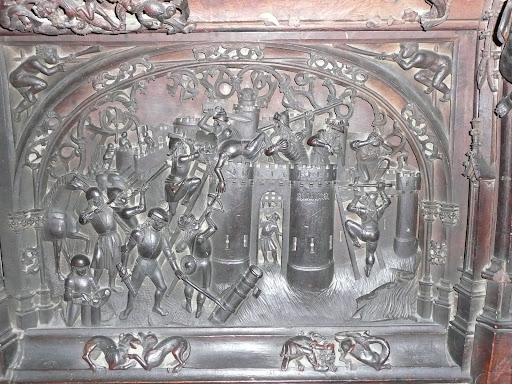 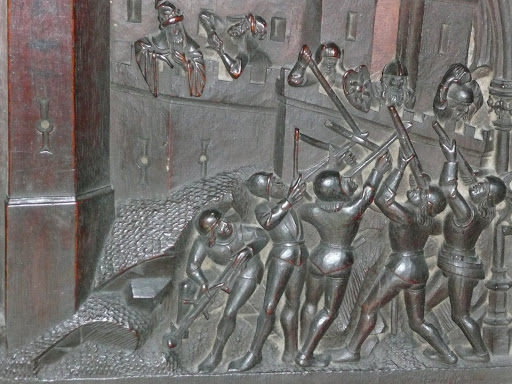 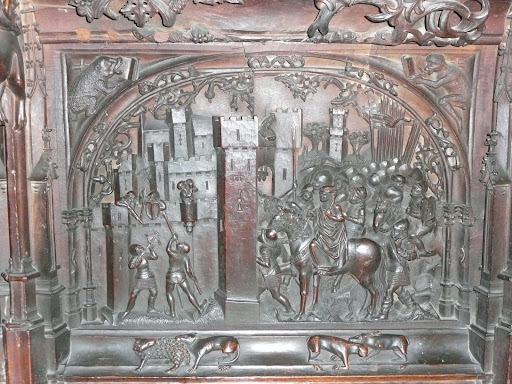
Last edited by Spiridonov; 14th November 2010 at 10:17 AM. |
|
|
|
|
14th November 2010, 05:07 PM
|
#37 |
|
(deceased)
Join Date: Sep 2008
Location: Bavaria, Germany - the center of 15th and 16th century gunmaking
Posts: 4,310
|
Brilliant, Alexander,
 Thanks a lot for sharing these! And: you're right of course, these are can be dated to ca. 1470-80. Best, Michael |
|
|
|
|
14th November 2010, 05:14 PM
|
#38 |
|
(deceased)
Join Date: Dec 2004
Location: Portugal
Posts: 9,694
|
Outstanding, Alexander
|
|
|
|
|
14th November 2010, 06:15 PM
|
#39 |
|
Member
Join Date: Nov 2008
Location: Russia, Leningrad
Posts: 355
|
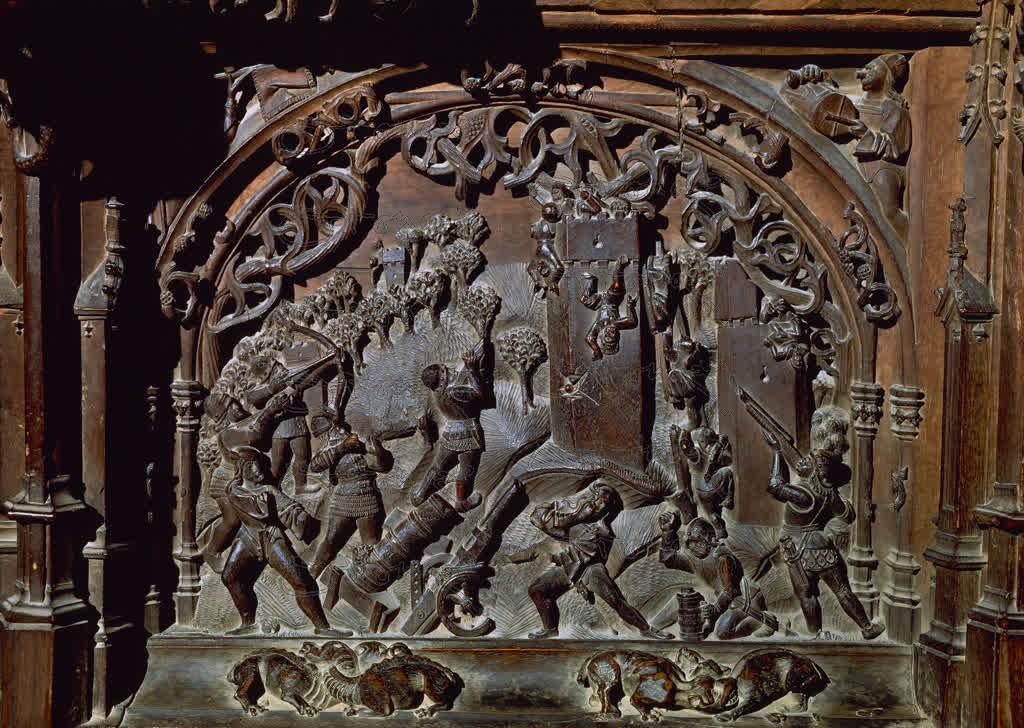
We can see even touch holes on the barrels:
|
|
|
|
|
14th November 2010, 06:21 PM
|
#40 |
|
(deceased)
Join Date: Dec 2004
Location: Portugal
Posts: 9,694
|
Yes, an extremely detailed work; right, Michl?
|
|
|
|
|
14th November 2010, 10:04 PM
|
#41 |
|
(deceased)
Join Date: Sep 2008
Location: Bavaria, Germany - the center of 15th and 16th century gunmaking
Posts: 4,310
|
Right, Alexender and 'Nando,
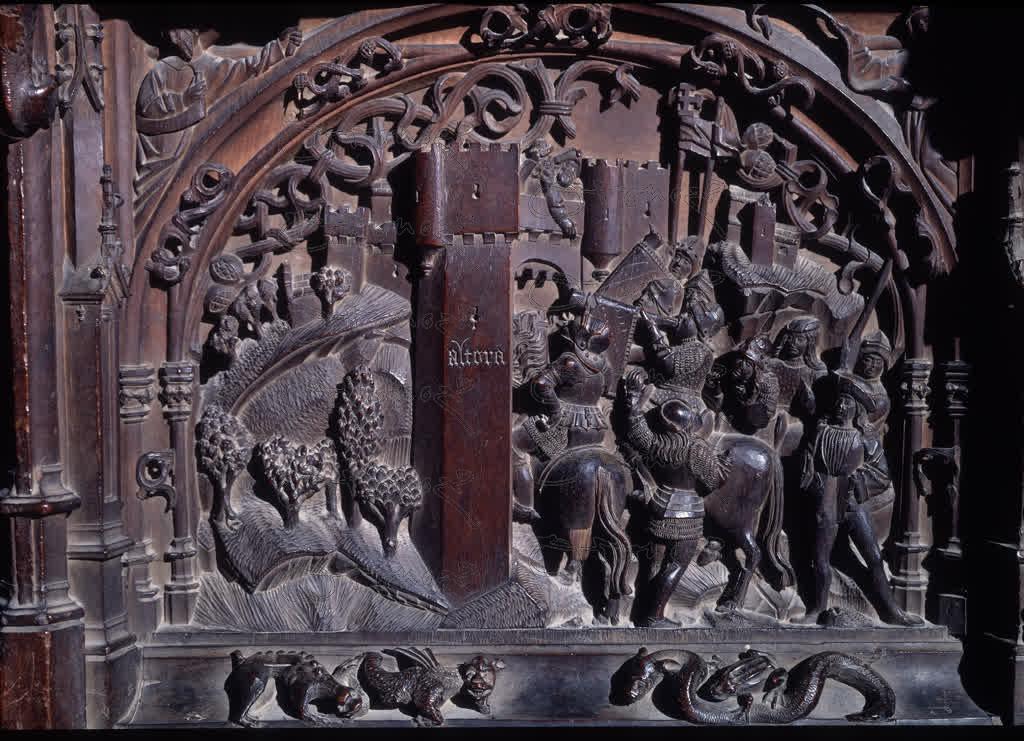
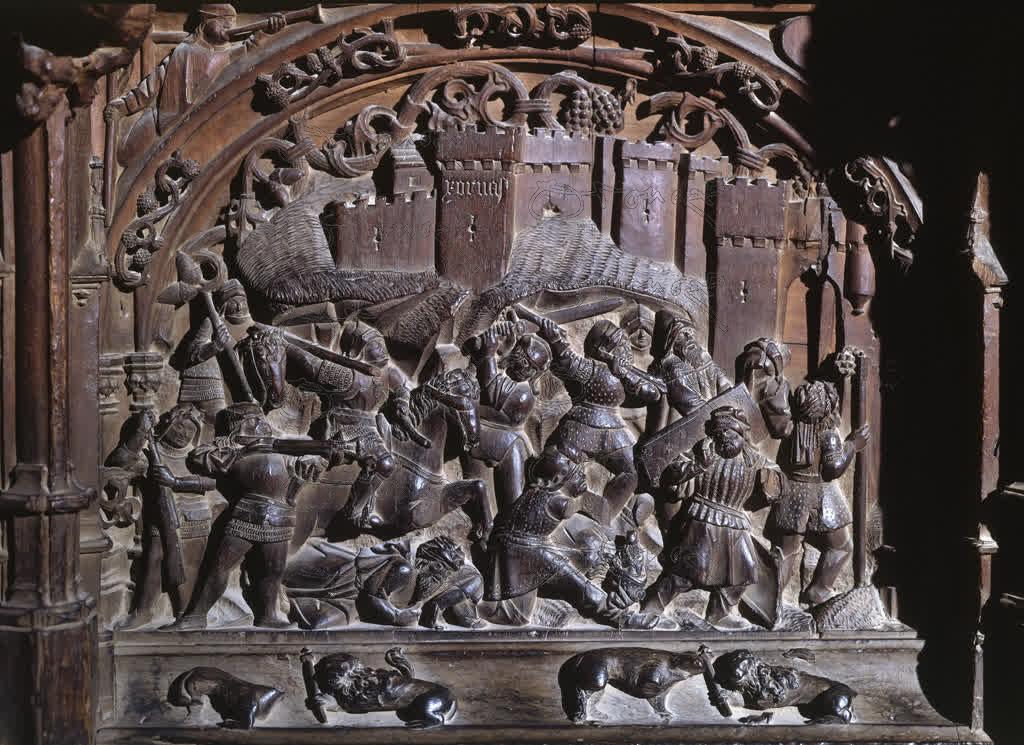
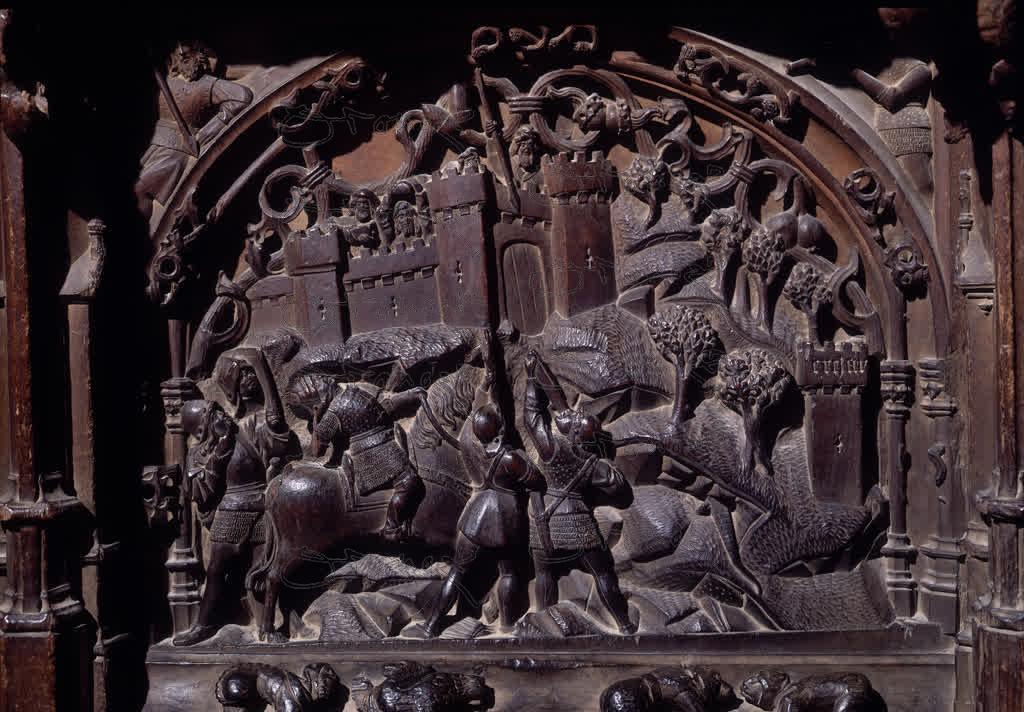
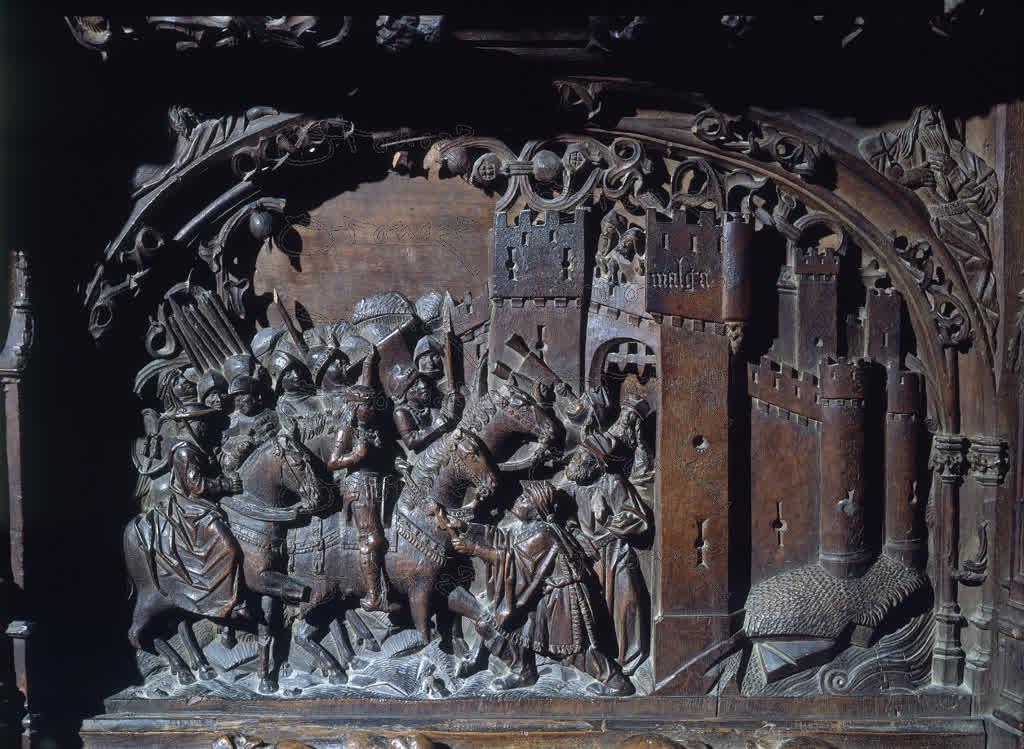
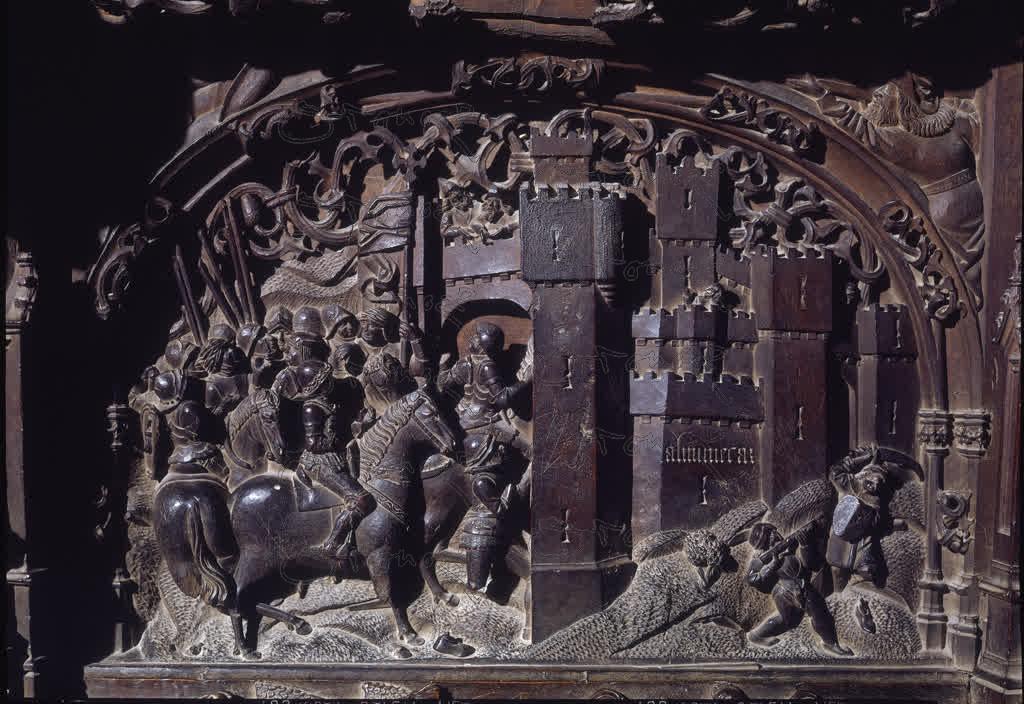
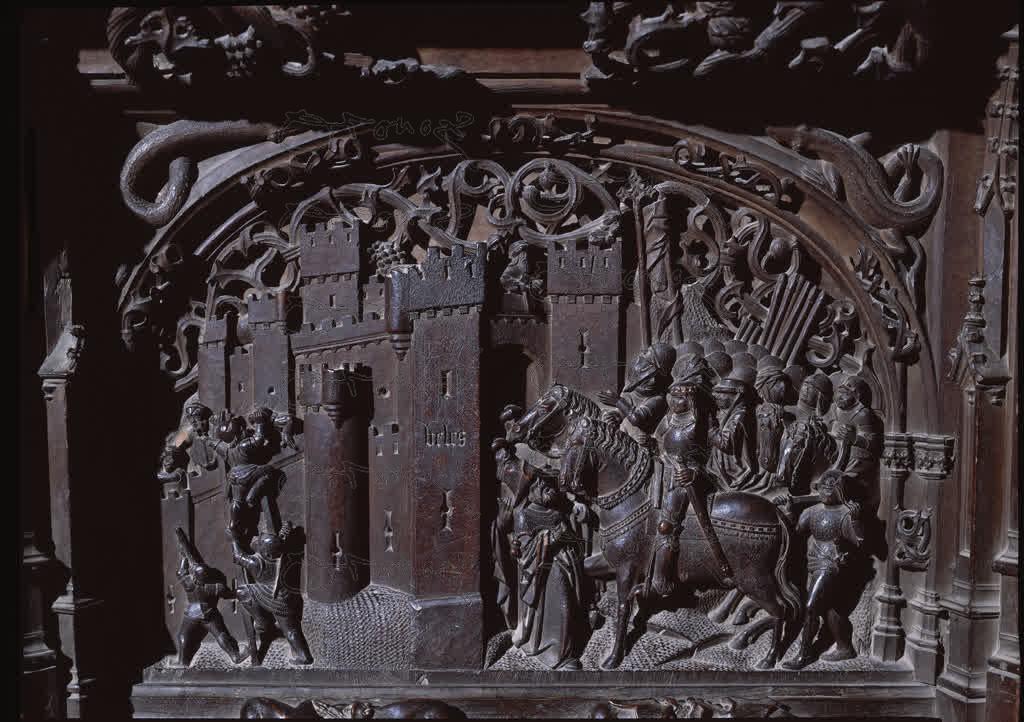
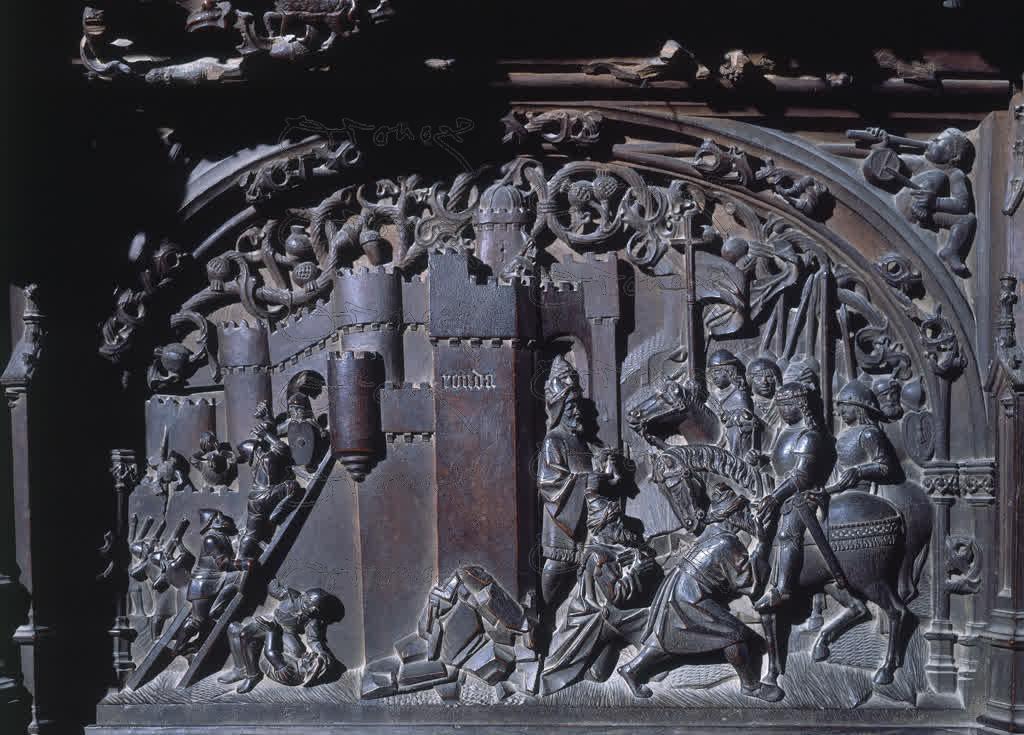
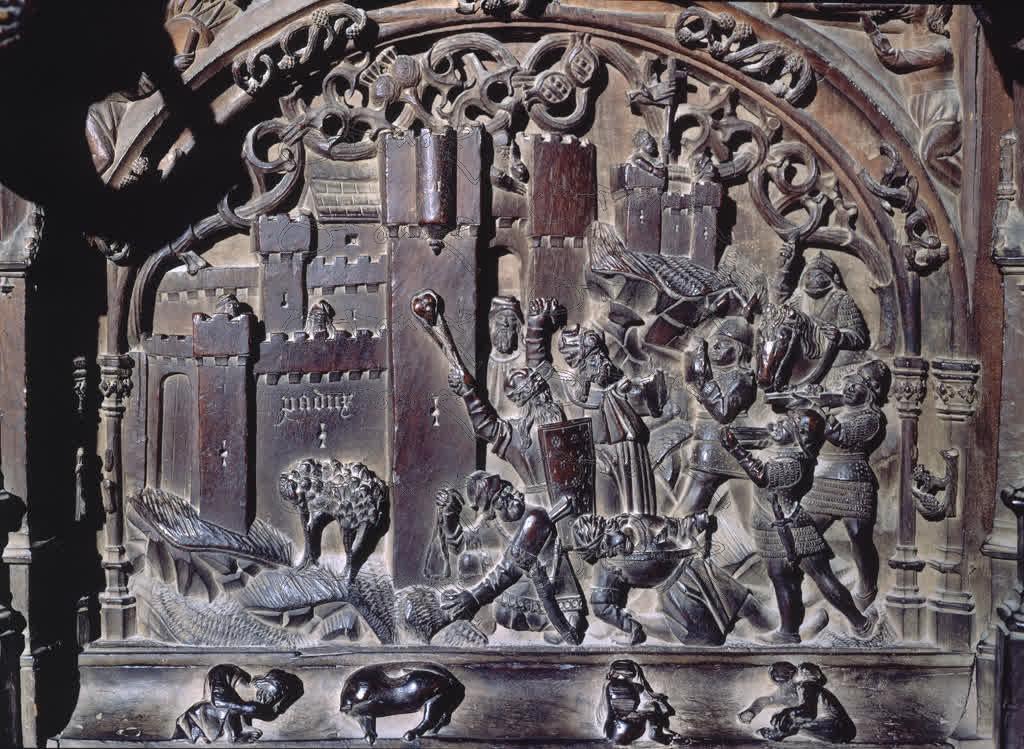
As usual, though, the act of ignition is left to imagination ...  That detail on early firearms just did not seem worth showing to period artists, at least normally not before ca. 1500. That detail on early firearms just did not seem worth showing to period artists, at least normally not before ca. 1500. Of course, exceptions prove the rule, especially in the early 15th century.  Characteristic of Spain, these obviously are details of carved oak Toledo choir stalls. Best, Michael |
|
|
|
|
16th November 2010, 01:05 PM
|
#42 |
|
Member
Join Date: Nov 2008
Location: Russia, Leningrad
Posts: 355
|
I think that these pictures was drawn later than 1492 year. We can see the inscription "ALHAMA" on the tower. It means that we see siege of Alham(b)ra at these pictury. The siege of Alham(b)ra was in 1492 year. So, I think that these picture was drawn between 1492 and 1500 years.
Last edited by Spiridonov; 16th November 2010 at 01:20 PM. |
|
|
|
|
16th November 2010, 03:09 PM
|
#43 |
|
(deceased)
Join Date: Dec 2004
Location: Portugal
Posts: 9,694
|
The late gothic carvings in the low choir of the Toledo cathedral were made by the artist Rodrigo Alemán between 1495-1498. The main scene does in fact represent the conquest of Granada (El Alhambra) by the Catholic Kings.
|
|
|
|
|
16th November 2010, 03:21 PM
|
#44 |
|
(deceased)
Join Date: Dec 2004
Location: Portugal
Posts: 9,694
|
Lower tier of choir stalls in the Coro, which were carved by Rodrigo Alemán in 1495 and feature 54 historical scenes from the conquest of Granada in remarkable detail. Each seat shows the defeat of a village.
. |
|
|
|
|
16th November 2010, 06:47 PM
|
#45 | |
|
Member
Join Date: Nov 2008
Location: Russia, Leningrad
Posts: 355
|
Quote:
|
|
|
|
|
|
16th November 2010, 08:18 PM
|
#47 | |
|
Member
Join Date: Nov 2008
Location: Russia, Leningrad
Posts: 355
|
Quote:
|
|
|
|
|
|
17th November 2010, 08:33 AM
|
#48 |
|
(deceased)
Join Date: Sep 2008
Location: Bavaria, Germany - the center of 15th and 16th century gunmaking
Posts: 4,310
|
Thank you so much, Alexender, for sharing these!
m |
|
|
|
|
26th November 2010, 12:19 PM
|
#49 |
|
Member
Join Date: Mar 2010
Location: York, UK
Posts: 167
|
Fascinating stuff, Michael! I'm especially captivated by the few I see where the user seems to be gripping the butt-stock beneath the crook of his arm - gets me wondering about "jezail grip" again, y'see.
 Interesting also is the subject of sights. I recall a conversation on the Nihonto Message Board, in which I asked essentially a similar question to one mentioned earlier: "Why put fore and backsights on something so inaccurate as a smoothbore muzzle-loader?" The answer has yet to be found, but one fellow suggested that it might be partially explained by the near-constant Japanese desire to improve on their wares, no matter how fractionally. I'd certainly call putting fore, intermediate and back sights on a Tanegashima an improvement - and a fractional one, at that. Might we be seeing something similar here: early European gunsmiths (at their own impulse, or the instigation of their buyers) attempting to improve the breed?
|
|
|
|
|
26th November 2010, 04:20 PM
|
#50 | |
|
(deceased)
Join Date: Sep 2008
Location: Bavaria, Germany - the center of 15th and 16th century gunmaking
Posts: 4,310
|
Quote:
Fascinating point. I just can't actually imagine how to do it. Do you have an idea? Best, Michael |
|
|
|
|
|
3rd December 2010, 10:00 AM
|
#51 |
|
Member
Join Date: Mar 2010
Location: York, UK
Posts: 167
|
With contemporary technology? Not a single clue
Rifling the bore would help improve accuracy at the price of a severe penalty to rate of fire; decreasing the windage might help a little and slow you down a little less, but the bullet will still fly in a fairly random manner and still not do too much beyond, say, a couple of hundred yards. Even the jezail, anecdotally renowned for accuracy at what were, by contemporary standards, longish ranges, has to obey the laws of physics.The only good reason I can see for adding all this panoply of sights to the guns is as a sort of "on the off-chance" measure. Most of the time, the thing's far too inaccurate to make use of them (especially if it's got a dodgy stock design, as in the Tanegashima), but occasionally you might just happen to encounter the right set of circumstances for them to be useful. |
|
|
|
|
3rd December 2010, 05:40 PM
|
#52 |
|
(deceased)
Join Date: Dec 2004
Location: Portugal
Posts: 9,694
|
Speaking of early gun sights and aiming positions.
... probably some of these are already known  . |
|
|
|
|
4th December 2010, 04:15 PM
|
#53 |
|
(deceased)
Join Date: Sep 2008
Location: Bavaria, Germany - the center of 15th and 16th century gunmaking
Posts: 4,310
|
Thank you, 'Nando,
I was aware of these and I am convinced that in Europe, too, sights were used from the point they arose (ca. 1460-70). The only remaining question is what their worth actually was, as the insides of the barrels were quite rough and not yet rifled. Best, Michl |
|
|
|
|
4th December 2010, 04:47 PM
|
#54 |
|
(deceased)
Join Date: Dec 2004
Location: Portugal
Posts: 9,694
|
Well, a sight is a sight ... independently from the amount of result it produces.
Perhaps we should go back into period context, to ponder on this situation, by not assuming that the sight helps you hiting a precise spot, but considering that it helps you hiting closer from such spot. ... Or, by other means, an educational tool, to make you start thinking about aiming and not just pointing. Oh, forget it
|
|
|
|
|
5th December 2010, 10:32 AM
|
#55 |
|
Member
Join Date: Mar 2010
Location: York, UK
Posts: 167
|
That's actually a very good point, 'nando. (Damnit, I always want to type "Ferd" when I address you, for some reason.) And another thought occurs to me: without any form of sight, one really just peers along the tube, gets a rough idea of where one's gun is pointing, and lets fly. Fine in a military context, but not so good when shooting individually.
Obviously, in a pitched gunnery battle, it's rate of fire and volume of lead in the air that counts. But when hunting, say, or practising shooting, you really need to have at least some idea of your aim. Given that this period - the 15th and 16th Centuries - was really that of the evolution of the gun into something approaching its modern shape, I suggest that these sights were put on guns for two reasons, primarily: 1) The limitations of these guns were perhaps not fully appreciated. They were changing fairly constantly, and often fairly swiftly (by the standard of the day); in the absence of detailed scientific knowledge, and with any corpus of experience being continually challenged by new developments and designs, early gunsmiths and their customers didn't really know enough about their weapons' internal ballistics. 2) Even among those who did have a fair understanding of guns, there was an impulse to provide sights for a variety of reasons. Sights cost money; along with decoration, they could be used as a means of proclaiming wealth. They encouraged better shooting, even if the internal ballistics of the gun did nothing to help out. And there was at least some chance that they could be useful in giving one a better shot; at fifty years, say, the chances of hitting your man-sized target go up to nearly 100%. |
|
|
|
|
5th December 2010, 04:10 PM
|
#56 | |
|
(deceased)
Join Date: Dec 2004
Location: Portugal
Posts: 9,694
|
Quote:
|
|
|
|
|
|
13th November 2012, 02:27 PM
|
#57 |
|
Member

Join Date: Nov 2012
Location: Halstenbek, Germany
Posts: 203
|
Hello Matchlock
Thank you for all this great and interesting infos on early fire arms. Do you have some more information on the painting showing a dead corps fireing a matchlock arquebuse (not the one from Clusone) such as artist, title and its actual location. http://www.vikingsword.com/vb/attach...id=36234&stc=1 Thanks in advance! Last edited by Andi; 14th November 2012 at 08:24 AM. |
|
|
|
|
14th November 2012, 12:50 AM
|
#58 |
|
Member
Join Date: Nov 2012
Posts: 42
|
Back-Sight Wheelock Carbine
Hi Michael,
Thank you for the interesting posts and detailed pictures. I was particularly intrigued by the discussion in regards to the sights on early firearms, and it brought to mind the back-sight on a 16th century wheelock carbine that I obtained years ago. The carbine is 32" long and comprised of an 18.5" barrel, with a sight that sits at the base of the barrel. I believe the carbine is possibly French or German dating to 1580 - 1600. The piece exhibits the wear and tear of long and hard usage, and has undergone some repairs and restoration to the stock. I often wonder what good a sight on such a gun would have provided. See the attached pictures... Regards, Paul |
|
|
|
|
14th November 2012, 12:58 PM
|
#59 | |
|
(deceased)
Join Date: Dec 2004
Location: Portugal
Posts: 9,694
|
Quote:
Matchlock has so much material in this forum that is not easy to locate a specific thread, some times I remember the picture but ...
|
|
|
|
|
|
14th November 2012, 02:20 PM
|
#60 |
|
Member
Join Date: Nov 2012
Location: Halstenbek, Germany
Posts: 203
|
Holla fernando!
Sorry. The link is actually the url of the image posted by matchlock earlier in this thread. I dont know how to insert an image which has already been upleaded by other users in other posts or threads (just in order not to waste online storage capacity). I have now uploaded again, please see below. |
|
|
|
|
|
|


 Linear Mode

