
|
 29th April 2009, 07:18 PM
|
#1 |
|
Member

Join Date: Sep 2008
Location: PR, USA
Posts: 679
|
 Fixing grip wires?
Hi guys,
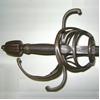
I own a beautiful swedish naval saber, possible late 18th or early 19th C. It has both medium and fine size grip wires. The thin ones are all fracturing at the contact area with the back-strap. I don't want to remove/replace them, but when I grab its grip, I fel them crumbling or being bent out of place. I was thinking of a drop of crazy-glue at the fracture site to stabilize and fix them . Any suggestions? Best M |

|

|
|
29th April 2009, 07:30 PM
|
#2 |
|
Member

Join Date: Oct 2007
Posts: 2,818
|
Look but don't touch
I don't have any suggestions to fully fix this but I have found over time that the wire, particuarly the fine ones do break. In one instance with success I placed the sword in a vice (gently) with the back strap facing down, proceeded to place some glue under the backstrap where the wire goes through and then pushed the broken fine wire into the groove where the glue was, held it for a couple of minutes and good as new and not seen to detract from the beauty of the piece.
The other suggestion I could make is, no matter how much you enjoy playing naked pirates in your living room, just leave the sword alone and appreciate it from afar, look but do not touch!!! Gav |
|
|
|
|
29th April 2009, 07:56 PM
|
#3 | |
|
Member
Join Date: Sep 2008
Location: PR, USA
Posts: 679
|
Ouch! Naked pirates and swords seem to me an injudicious, and potentially painful combination, to put it mildly.
Thanks for the pointer, it does have lots of fractured thin wires. And rest assured, I seldom grab the saber by its grip. Best M Quote:
|
|
|
|
|
|
29th April 2009, 08:15 PM
|
#4 |
|
Member

Join Date: Dec 2004
Location: What is still UK
Posts: 6,004
|
Depending on how bad the damage? If the wire is simply broken then you could find somebody like a jeweller who has one of these-
http://www.ottofrei.com/store/produc...oductid=17294- Just micro arc welding really. They should be able to fix the wire. I find it a very handy tool. Not to be used as a hobby thing really. |
|
|
|
|
12th June 2009, 05:52 PM
|
#5 | |
|
Member
Join Date: Sep 2008
Location: PR, USA
Posts: 679
|
Haven't found any so far...
 What do you guys think about using little beads of glue to hold them in place? Any suggestions on this, or the type of glue? Best Manolo Pics:      Quote:
|
|
|
|
|
|
12th June 2009, 06:00 PM
|
#6 |
|
(deceased)
Join Date: Dec 2004
Location: Portugal
Posts: 9,694
|
I (epoxy) glue mine.
Maybe a crime, collector wise, but an endless solution. Fernando |
|
|
|
|
14th June 2009, 01:20 AM
|
#7 | |
|
EAAF Staff
Join Date: Dec 2004
Location: Louisville, KY
Posts: 7,407
|
Quote:
Glue or just leave it alone would be best (especially leaving it alone). |
|
|
|
|
|
14th June 2009, 01:52 AM
|
#8 | |
|
Member
Join Date: Sep 2008
Location: PR, USA
Posts: 679
|
Thanks for the suggestions, guys.
This is such a sweet, beautiful, and graceful saber, that seing all those wires flip-flopping around truly pains me. I don't know if i'll be able to keep my paws in check... I believe this piece to be an early 19th C. Swedish naval saber, ~1800-20?. I got it under the label of late 18th C. If anyone has more info, kindly let me know. Best Manolo Quote:
|
|
|
|
|
|
14th June 2009, 10:10 AM
|
#9 | |
|
Member

Join Date: Jul 2008
Location: Stockholm
Posts: 182
|
Quote:
Given the relatively simple decoration on yours, I would suspect that it was made for someone who didn't have very deep pockets, especially as it doesn't look gilded to me. It would take until 1824 before a new model was adopted for naval officers, but I doubt any quantity of swords with this hilt type were ever made after 1809. In Sweden this hilt type is known as Gustavian (the Gustavian style being what was in fashion under Gustav III by and large). These hilts remained fashionable under the reign of Gustav IV as well. However, Gustav IV lost Finland to Russia (quite the national trauma, Finland had been Swedish since the middle ages), was forced to abdicate by a military coup, and eventually replaced by the French marshal Jean Baptiste Bernadotte (who reigned as Karl XIV Johan). As a result of this the Gustavian hilt went out of fashion in a hurry, largely replaced by French styles. The youngest Gustavian hilt shown in the volumes of Svenska Blankvapen that I have at hand is dated to 1810. Given that officers were generally allowed quite a bit of freedom in arming themselves, I suspect that few followed the regulations there in the period 1809-1824. 39 years after initial adoption the old pattern was probably starting to get a bit dated anyway, as far as taste and fashion went. |
|
|
|
|
|
14th June 2009, 11:53 PM
|
#10 | |
|
Member
Join Date: Sep 2008
Location: PR, USA
Posts: 679
|
Hi Kisak,
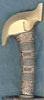
It's always a pleasure to read your comments on swedish steel. Thank you kindly for expanding my limited knowledge of same. I'm aware the naval saber isn't exactly the fancy-schmancy type. But then, it is precisely it's simplicity and clean lines that attract me. : ) BTW, I own a couple swords that I haven't been able to ID. The first was initially labeled as a french mameluke sword, the second seems to be some sort of academic/cadet sword. Could they be swedish? Does anything similar appear on SB? Best Manolo pics:   Quote:
|
|
|
|
|
|
15th June 2009, 08:11 PM
|
#11 | |
|
Member
Join Date: Jul 2008
Location: Stockholm
Posts: 182
|
Quote:
As for the others, I can't recall seeing anything matching in style to either labelled as Swedish (SB, Seitz' Svärdet och Värjan, The Army Museum's exhibits, various local auctions), so I'd consider it unlikely that they're from around here. The mameluke hilt doesn't seem to have really caught on up here, and what we have in the way of symmetrical cross-hilts from that period tend to be on civilian swords of honour, quite different in both style and materials from tat one (often gilt brass hilts with mother-of-pearl or Älvdals-porphyry grips). |
|
|
|
|
|
15th June 2009, 08:39 PM
|
#12 | |
|
Member
Join Date: Sep 2008
Location: PR, USA
Posts: 679
|
Thanks again, Kisak.
Exactly my thoughts. I actually dislike foppish, decorative officer's swords... : ) Regarding the mameluke sword, I found a period drawing of a mameluke-de-la-garde carrying a similar looking sword. But the french always marked their swords, and this one is not. The second one, I have literally just found some info on it. Seems to be a late 1800s fraternal sword made by Ames (Grecian Sword) of either the IOOF (Independent Order of Odd Fellows), or for use by the Masters of Ceremonies of the US Knights of Pythias. Best Manolo Quote:
|
|
|
|
|
 |
| Thread Tools | Search this Thread |
| Display Modes | |
|
|


 Linear Mode

