
|
 14th August 2021, 06:21 PM
|
#1 |
|
Member
Join Date: Apr 2015
Posts: 168
|
 British 1803 pattern flank officer sword?
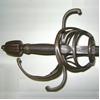
Hi, I have this little sabre what looks like a 1803 pattern infantry officer sword. Not sure what to think of it but maybe someone knows what it realy is?! The length of the blade is 55cm. Overall length without the scabbard is 66,5 cm. Despite the wear It is still razor sharp. Floral motives on the blade with some traces of guilding.
The handle is simply wrapped in black leather wich seems original to me. The scabbard has an old repair on the locket and a later repair where it probably broke in two. Overall, it has seen better days. |

|

|
|
14th August 2021, 06:43 PM
|
#2 |
|
(deceased)
Join Date: Dec 2004
Location: Portugal
Posts: 9,694
|
A flank sword with only 55 cms, cel7 ?
Must be something else ... i am afraid  . .Can't you figure out what some the letters on the blade say ? Let us hear from the members ! . Last edited by fernando; 14th August 2021 at 06:55 PM. |
|
|
|
|
14th August 2021, 07:37 PM
|
#3 | |
|
Member
Join Date: Apr 2015
Posts: 168
|
Quote:
|
|
|
|
|
|
15th August 2021, 04:47 AM
|
#4 |
|
Member
Join Date: Jul 2021
Location: New Zealand
Posts: 88
|
The 1803 flank officers sabre had a slotted hilt guard rather than a simple stirrup so this is definitely not an 1803.
However sabres became popular with British infantry officers in 1796 when the much maligned spadroon was introduced and a wide range of sabres and hangers were carried unofficially. The British military recognized the issue and passed orders allowing flank officers to carry sabres in 1799 but no official pattern existed until 1803. What you have could well be one of the unofficial 1796-1803 sabres. It is worth noting that some regiments "standardized" their non pattern sabres and continued to use them as regimental pattern after 1803. Robert |
|
|
|
|
15th August 2021, 10:14 AM
|
#5 | |
|
Member
Join Date: Apr 2015
Posts: 168
|
Quote:
|
|
|
|
|
|
15th August 2021, 10:49 AM
|
#6 |
|
(deceased)
Join Date: Dec 2004
Location: Portugal
Posts: 9,694
|
I would not discuss the pattern of this sword. I just find it rather surprising that the blade of a cavalry sword, or a sabre, even the flank version, would measure 21,65 inches
.
|
|
|
|
|
15th August 2021, 11:06 AM
|
#7 |
|
Member

Join Date: Mar 2006
Location: Room 101, Glos. UK
Posts: 4,286
|
A short-sword, or hanger. Naval officers fighting sword?? Police of the period carried hangers on occasion. An overall photo of the sword and the point is usually informative regarding it being shortened. Engravings like shown are moire typical of pre-pattern swords.
|
|
|
|
|
15th August 2021, 11:14 AM
|
#8 | |
|
Member

Join Date: Jan 2011
Posts: 1,164
|
Quote:
In preparation for the war with France in 1794, all ensigns under eleven and all lieutenants under fourteen were removed from post. There were some very short officers in the British army. Myself I think it most likely to be a drummers or bandsman's sword due to the lack of gilding and other detail. |
|
|
|
|
|
15th August 2021, 11:18 AM
|
#9 | |
|
(deceased)
Join Date: Dec 2004
Location: Portugal
Posts: 9,694
|
Quote:
|
|
|
|
|
|
15th August 2021, 11:58 AM
|
#10 |
|
Member
Join Date: Apr 2015
Posts: 168
|
Some more pictures. If you look closely you can see that the fuller runs almost to the point. So perhaps the blade was shortened for some reason.
|
|
|
|
|
15th August 2021, 12:01 PM
|
#11 |
|
Member
Join Date: Jan 2012
Posts: 419
|
I think this is a British 'non-military' sword of the type supplied to and used by watchmen, constables, bank guards, prison officers etc. Possibly also customs officers and the merchant navy, altho' there is no evidence of a nautical connection. It seems an early example of what later became a very recognisable type associated with Parker Field.
Regards Richard |
|
|
|
|
15th August 2021, 12:30 PM
|
#12 | |
|
Member
Join Date: Apr 2015
Posts: 168
|
Quote:
I doubt that actually. "warranted" means that the weapon is tested for strenght, hardness, flexibility etc. This was a guarantee that you bought a weapon that met the requirments needed on the battlefield. In other words, a more expensive weapon. Why would you do that if you knew that you probably never need to use it?! |
|
|
|
|
|
15th August 2021, 01:52 PM
|
#13 | |
|
Member
Join Date: Jan 2011
Posts: 1,164
|
Quote:
|
|
|
|
|
|
15th August 2021, 02:26 PM
|
#14 | |
|
Member
Join Date: Oct 2007
Posts: 1,657
|
Quote:
Not necessarily and probably not. Many blades of the latter 18thC have fullers that run to the point. I have several with this on both straight and curved blades. Regards, Norman. |
|
|
|
|
|
15th August 2021, 03:52 PM
|
#15 |
|
Arms Historian

Join Date: Dec 2004
Location: Route 66
Posts: 10,862
|
Great comments and on point observations. I agree with this probably being a band hanger or of that genre as suggested by David R. Well noted by Richard and Wayne on the possible law enforcement use and Richards note on later Parker Field swords for the law enforcement of the years into mid 19th and beyond, this is a field of edged weapons not well traveled.
The 'warranted' inscription does not really have to do with battle 'testing' but came from the 'sword scandals' in late 1780s in England. A group of English blade makers, led by Birmingham swordsmith Thomas Gill began protesting the long standing practice of importing blades from Germany. He claimed the English blades were as good and actually better than the German imports, and initiated testing to prove it. In the subsequent testing of his blades and several others including Henry Osborn, it was proven as only several of the English blades failed where the failures in the numbers of German blades were considerable. From here, beginning with Thomas Gill, he began to place the motto on the blade, 'WARRANTED NEVER TO FAIL'. I have a M1788 Thomas Gill saber with that inscription on the back of the blade. Through the 1790s as late as perhaps 1810, he and several English makers would place the 'warranted' notice on their blades, though typically officers along with etched or inscribed motif. Officers swords were well decorated, and typically not exactly 'combat' oriented, as in those times officers were not expected to participate in the action, but their swords were mostly used to 'direct' etc. Naturally, that was not always the case, but I have always noticed officers blades were in many instances notably shorter, though by only about 5 ". In this I agree with Cel7, the warranted signifies the testing of the blade quality, not combat readiness. |
|
|
|
|
15th August 2021, 09:44 PM
|
#16 |
|
Member

Join Date: Aug 2017
Location: North Queensland, Australia
Posts: 202
|
G'day Guys,
My 5 cents worth. The grip and knuckleguard are unusual for a sword of this time period. The rounded knucklebow/guard remind me of later constabulary hangers, but I guess is also similar to the rounded knucklebow of some 1803's. The scabbard has almost certainly been shortened as the scabbard chape does not match the locket. The full length fuller is often seen on earlier blades, but is unusual in a blade of this period. I think the blade has been shortened, but it obviously wasn't done recently. I guess there is no sign of a maker's name on the other side of the blade? I think it started out life as a normal sized sword that was later shortened. What is the width at the ricasso? Cheers, Bryce |
|
|
|
|
15th August 2021, 10:40 PM
|
#17 | |
|
Member
Join Date: Apr 2015
Posts: 168
|
Quote:
|
|
|
|
|
|
15th August 2021, 10:40 PM
|
#18 | |
|
Member
Join Date: Apr 2015
Posts: 168
|
Quote:
|
|
|
|
|
|
15th August 2021, 11:24 PM
|
#19 | |
|
Arms Historian
Join Date: Dec 2004
Location: Route 66
Posts: 10,862
|
Quote:

|
|
|
|
|
|
16th August 2021, 01:58 AM
|
#20 |
|
Member
Join Date: Aug 2017
Location: North Queensland, Australia
Posts: 202
|
Thanks mate,
37mm puts it in the range of normal sized swords. If it started out life this short I would have expected it to be a bit narrower than this. Doesn't tell us when the shortening was carried out though. Cheers, Bryce |
|
|
|
|
16th August 2021, 04:08 PM
|
#21 | |
|
Member
Join Date: Apr 2015
Posts: 168
|
Quote:
The width and thickness of the blade at the base of the ricasso are less with the other two. Also the point of balance of the saber we discuss here is way to close to the hilt compared with the two others of which I'm sure have the original length. 7 cm that is, compared to 10 cm for the Briquette and 12,5 for the one on the left hand site. |
|
|
|
|
|
17th August 2021, 10:29 AM
|
#22 |
|
Member
Join Date: Jul 2021
Location: New Zealand
Posts: 88
|
The engraving on the blade seems to say officers sword more than police hanger. Also the shot of it in comparison with the other two hangers shows that if it has been shortened then its original curve was quite extreme. Wildly varying amounts of curvature were another feature of the pre 1803 sabres.
Robert |
|
|
|
|
17th August 2021, 06:21 PM
|
#23 | |
|
Arms Historian
Join Date: Dec 2004
Location: Route 66
Posts: 10,862
|
Quote:
|
|
|
|
|
|
26th November 2021, 10:47 AM
|
#24 | |
|
Member
Join Date: Sep 2021
Location: New Zealand
Posts: 303
|
Quote:
|
|
|
|
|
|
26th November 2021, 10:59 AM
|
#25 |
|
Member
Join Date: Sep 2021
Location: New Zealand
Posts: 303
|
Interesting hanger Cel, does it have a Royal Cypher on the blade?
The markings look late 18th Century, very early 19th Century to me. Personally I don’t think the blade has been shortened as the termination of the fuller follows the curve of the blade tip. Cheers Bas |
|
|
|
|
26th November 2021, 06:57 PM
|
#26 |
|
Member
Join Date: Mar 2006
Location: Room 101, Glos. UK
Posts: 4,286
|
I note the original posted sword scabbard appears to have once had a stud like a scabbard for an infantry briquet/hanger frog rather than the two ring suspension for a sabre.
"Warranted never to fail" If it fails on the battlefield/naval boarding, bring it back, and we'll replace it. Reminds me of what they tell a Paratrooper when they issue him his parachute.  Also reminds me of mine:25" (63.5 cm) blade, 2" (5.08 cm) wide at guard: The fuller is centred down to the start of the false edge, then starts to divert down away from the point as it fades away as the blade thins. Last edited by kronckew; 26th November 2021 at 07:28 PM. |
|
|
|
|
26th November 2021, 07:49 PM
|
#27 | |
|
Member
Join Date: Apr 2015
Posts: 168
|
Quote:
|
|
|
|
|
|
29th November 2021, 04:36 PM
|
#28 |
|
Member
Join Date: Jan 2012
Posts: 419
|
I'm going to expound on a couple of points made earlier in this thread.
I'm not sure an engraved blade denotes officer status as such. In the UK most officer's swords were privately purchased and presumably this was the major demand. Hence if you went to a sword cutler for an individual purchase you would most probably be offered a blade of 'officer' type, i.e. decorated to greater or lesser extent, even if you were not an officer. Thus I think a decorated blade probably denotes a private purchase blade rather than one supplied through the contracting system, and not necessarily an officer's. Depending on your definition, I would dispute that constabulary hangers etc. were of 'munitions' grade. The later Parker Field hangers, altho' rather plain were of a greater functional quality and finish than most military swords, including those of officers. This also applied to early police pistols; plain, robust, functional and in no way inferior to military issue. Also consider those early police truncheons; turned, painted, gilded, way beyond 'munitions' grade. Prior to police reform in the early 19th Cent. Parish Constable was an ancient official position with a number of associated official duties, e.g. administration of courts. The Parish Constable might well be a landowner, merchant or businessman that would consider himself of 'officer' class. Remember the head of a UK police force is still the Chief Constable. Other civilian weapons of the time that survive, e,g. Mail blunderbusses, Bank of England muskets, are also of 'better than they need be' quality. The point I am making is that an early 19th Cent constable's hanger might well show similarities with an officer's sword. Regards Richard |
|
|
|
|
13th December 2021, 02:22 AM
|
#29 | |
|
Member
Join Date: Sep 2021
Location: New Zealand
Posts: 303
|
Quote:
In the 1780s the Treasury was receiving requests from many of the London makers and suppliers to remove the duty on imported swords and blades, owing to the alleged inferior quality of English swords. Seeing his livelihood threatened Thomas Gill wrote to the treasury that his swords were as good as any coming out of Germany and requested that a test be performed comparing his blades to the imported ones. This request was passed on to the Board of Ordnance who replied that the purchasing of swords with the responsibility of the colonels of individual regiments. Not content to leave the matter, Thomas Gill continued with his campaign to have tests taken. When, in 1786 the East India Company placed an order with various suppliers for 10,000 horsemen's swords Thomas once more called for comparative tests to be performed. In October 1786 the first tests were performed on a special machine made for the East India Shipping Committee, which included swords by Gill, Runkel, Hervey. I'll post the results when I have them to hand later today, but needless to say, Gill's swords came out the clear favourite. Runkel's swords from Solingen came in second and quite a bit ahead of the other two which does in part support what was being claimed about the state of English sword manufacturing. |
|
|
|
|
|
13th December 2021, 07:18 AM
|
#30 |
|
Member
Join Date: Sep 2021
Location: New Zealand
Posts: 303
|
Results of the test, as you can imagine, Woolley was not happy with the results and felt ambushed by the tests.
|
|
|
|
 |
| Thread Tools | Search this Thread |
| Display Modes | |
|
|


 Linear Mode

