
|
|
|
 19th January 2016, 12:12 PM
|
#1 |
|
(deceased)
Join Date: Dec 2004
Location: Portugal
Posts: 9,694
|

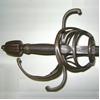
Outstanding find, CSinTX.
A very impressive and rather lengthy example. I wish i had one of these  . .17th century, i wold guess. The inscription is very Castillian; this would be a Toledo sword. |

|

|
|
19th January 2016, 01:05 PM
|
#2 |
|
Member
Join Date: Mar 2009
Posts: 1,071
|
@ Fernando, yes you are right in "Diccionario de la lengua castellana"
is written Acomete Quien Quiera , El Fuerte Espera =en que se advierte que es mas valor esperar con serenidad peligro , que acometer my Spanish is not so good, this is an understatement and correct me if I'm wrong, I think it means something like; that It warns/says that it is more valuable to wait calmly and that is dangerous to rush. very nice cup hilt rapier btw. best, Jasper |
|
|
|
|
19th January 2016, 02:18 PM
|
#3 |
|
Member
Join Date: Jul 2014
Posts: 447
|
Casey,
congratulations with this fine pierced cup hilt rapier ! Acometa quien quiera, el fuerte espera is a proverb written by César Oudin in 1609. https://resdiachronicae.files.wordpr...pablo_luis.pdf Proverbe en espagnol : « Acometa quien quiera, el fuerte espera. » Traduction française : « Attaque qui voudra, le brave l'attendra. » So free translated it means , Attack whoever wants, the brave are waiting ! I can only imagine what the owner must have felt holding this rapier in his hands while these lyrics went trough his mind ... Kind Regards Ulfberth |
|
|
|
|
20th January 2016, 01:47 AM
|
#4 | |
|
Arms Historian

Join Date: Dec 2004
Location: Route 66
Posts: 10,872
|
Quote:
Outstanding entry noting the source for this quote and the translation!! What a beautiful cup hilt! Thank you for adding that on the translation Ulfberth 
|
|
|
|
|
|
20th January 2016, 05:48 PM
|
#5 |
|
Member
Join Date: Jul 2014
Posts: 447
|
Thanks Jim !
This cup hilt has it all, beautifully chiseled guard and pommel, finely pierced cup and an inspiring proverb on the blade. What also intrigues me is the shell shape ends on the pas dane, this is a design I have seen on 16th pommels. Can this design perhaps be related to a certain area or origin ? kind regards Ulfberth |
|
|
|
|
20th January 2016, 07:07 PM
|
#6 |
|
Arms Historian
Join Date: Dec 2004
Location: Route 66
Posts: 10,872
|
That is a very good point Ulfberth, and these striated shells are a feature I have always associated with hilt features on Spanish examples. These are in my opinion keenly associated with the scallop shell, the symbol most used representing St James of Compostela. This is turn seems to be very much aligned with Spanish and Portuguese military orders, and likely in other related items of material culture.
This same striated shell is often as extended in counter guards, and on various edged weapon motif. Interestingly I originally noticed this feature in research on Spanish colonial espada anchas of the 18th to early 19th . in the shell over the forte from the guard. This seems to have been prevalent through the 18th but I found the feature of course did reach much farther back as noted, but seemingly confined to Spanish items or provincially related examples. One cannot resist the fascinating lore and history that surround these magnificent cuphilts, the mystery of the Spanish fencing technique, Destreza, and it is easy to see why the Spaniards resisted giving up these traditions for so long. |
|
|
|
|
21st January 2016, 08:08 AM
|
#7 |
|
Member
Join Date: Jul 2014
Posts: 447
|
So its the same symbol that Fernando recognised on the sail guard dagger Casey has.
Here is an example of a 16th c sword with a scallop shell type pommel and a rapier that has the shell decorations all over its guard, Poldo Pezolli museum Milan Notice that the rapier has the same typy of quillion block with thick side walls to hold the blade firm. Kind regards Ulfberth Last edited by ulfberth; 21st January 2016 at 08:48 AM. |
|
|
|
|
22nd January 2016, 08:19 AM
|
#8 | |
|
Member
Join Date: Aug 2015
Posts: 135
|
Quote:
I was interested to see this and your comments on another thread about a shell hilted hanger.Here is a similar feature in the hilt of what I believe to be a 1728 Spanish Cavalry Officer's sword. |
|
|
|
|
|
19th January 2016, 02:28 PM
|
#9 |
|
(deceased)
Join Date: Dec 2004
Location: Portugal
Posts: 9,694
|
You are closest from it, Jasper.
A strict translation (through portuguese) would be: Whoever it is may atack but ... the strong (brave) waits. The interpretation being: it is foolish to atack; better calmly wait. |
|
|
|
|
19th January 2016, 02:32 PM
|
#10 |
|
(deceased)
Join Date: Dec 2004
Location: Portugal
Posts: 9,694
|
Casey, have you lurked inside the guard, both sides of the ricasso; to check whether there are any smiths marks ?
|
|
|
|
 |
| Thread Tools | Search this Thread |
| Display Modes | |
|
|


 Hybrid Mode
