Quote:
Originally Posted by anoakenstaff

Salaams, all.
I've been a lurker for a few years, and I wanted to make an account to ask about a couple things I thought were related enough to fit in one thread.
]
|
Hello, I'm coming to this a little late but this is a great topic, and I encourage you to continue and share your research. It sounds like you are making excellent use of comparative material and you have already alluded to several points I would want to make, but I will anyway share some perhaps familiar material that may offer some new leads.
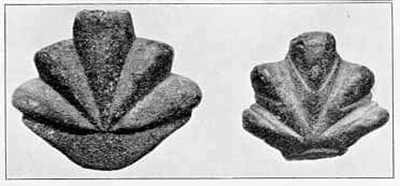
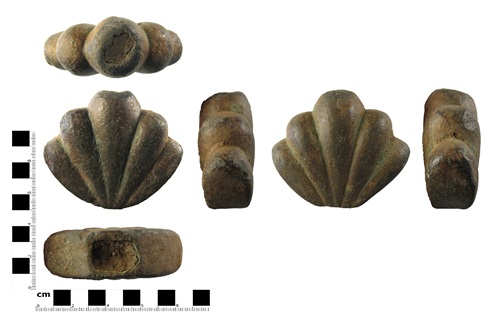
A variety of lobed or trefoil-shaped pommels were definitely used throughout Western Europe during the high medieval period, so I think you are right to reject any influence more exotic than possibly Andalusia. There are almost no surviving examples, but consistent artistic depictions suggest various trends in design. These forms are only barely covered in Oakeshott's typology, so there is plenty of space for further research.
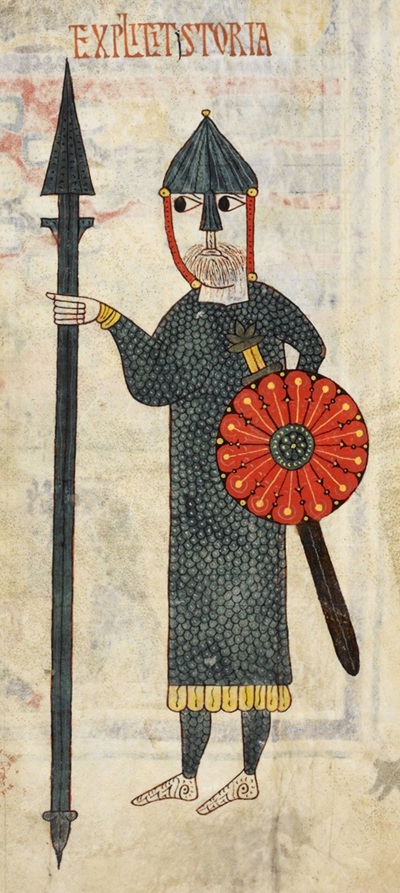
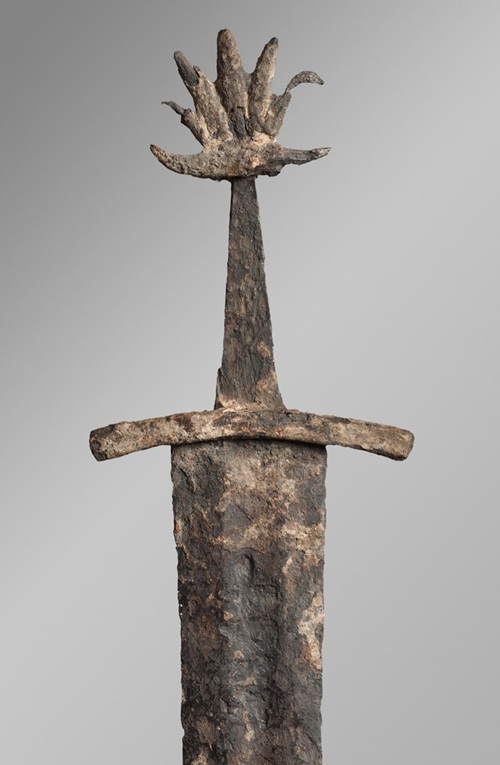
The closest analogue of the hilt depicted in the Spanish
Beatus manuscript you mention is one that Oakeshott did publish at least once (
Records of the Medieval Sword). Often described as a "Viking" sword, it was reportedly excavated in Italy, near Florence.
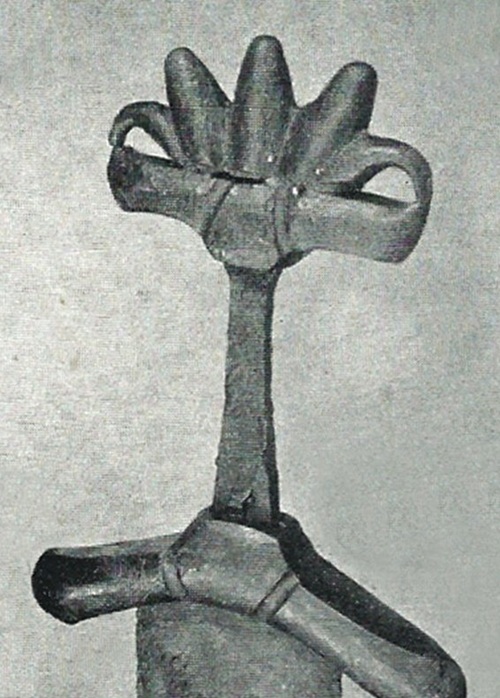
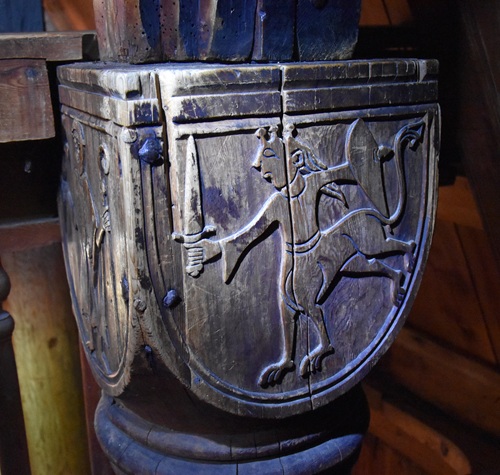
The next closest, from a grave in Sweden, is more clearly derivative from Scandinavian styles of the late Viking age, which include many lobed pommel forms. Lobed forms continue to be depicted well after Christianization, including in the famous stave church of Urnes.
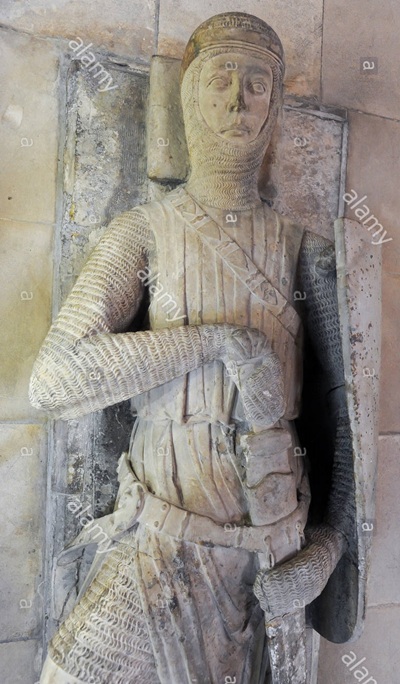
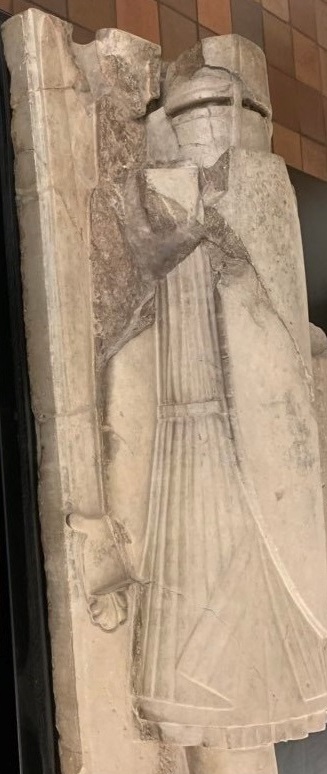
Scandinavian influence seems to be reflected by the frequency with which lobed pommels are found throughout the British Isles, with identical forms often turning up at great distances in Norway or Iceland (the Cawood and Koysogarden swords discussed by Oakeshott being the best-known examples). Many stray pommels are now recorded with the Portable Antiquities Scheme. These pommels can plausibly be dated well into the the 13th century based on comparison with knightly effigies (attached from Temple Church, Furness Abbey, Jerpoint).
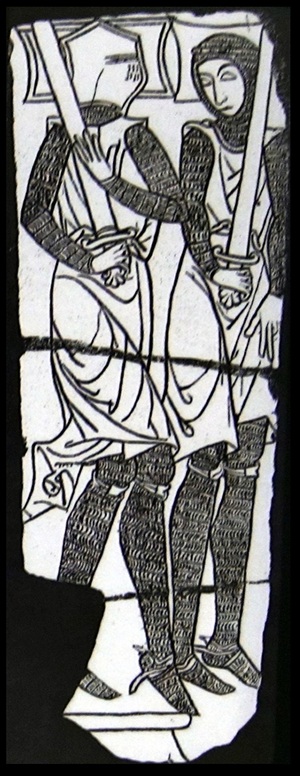
(continued below...)